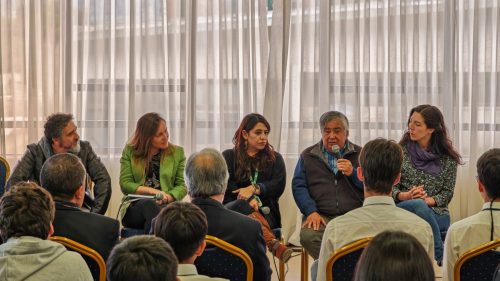
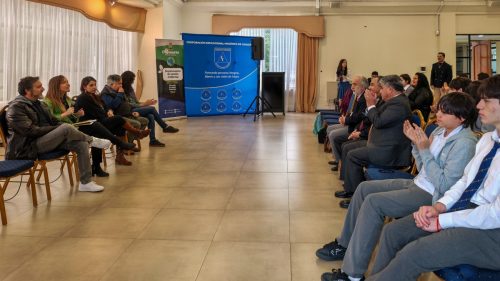
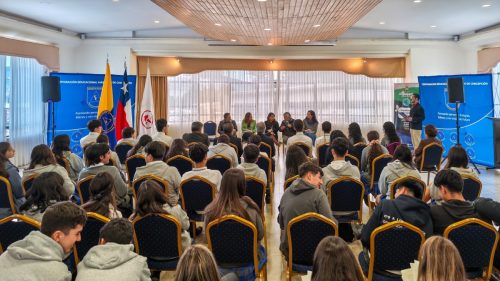
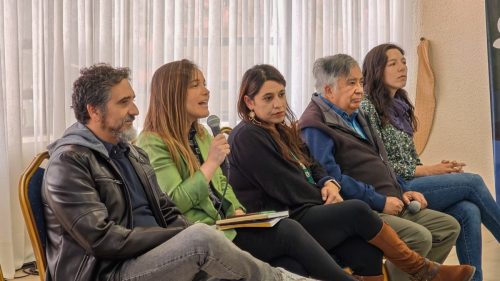
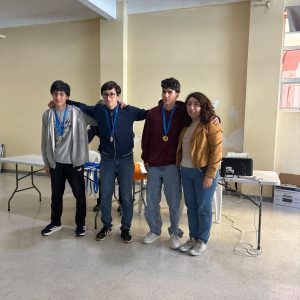
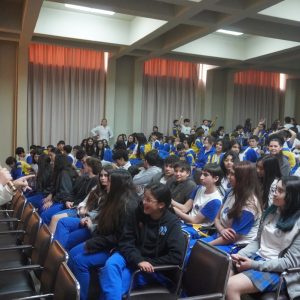
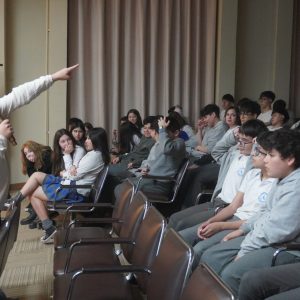
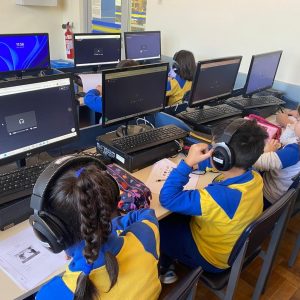
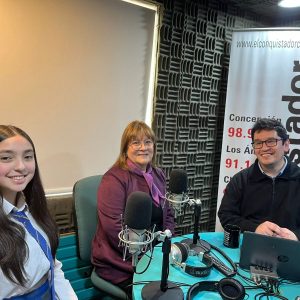
As a continuation of the Scientific Panel on Earth Day and Climate Change, students from the ICT Extracurricular Class carried out a series of interviews with the invited guests, extending the reflection beyond the main event and creating a space to listen more closely to their ideas, experiences, and messages for our school community.
This activity allowed students to take an active role as school communicators. They invited each guest to introduce their professional background, explain how their work is connected to the environment, and share a final message with the Colegio Concepción community.
One of the interviews was with Camila de la Fuente, psychologist and university lecturer, who reflected on the relationship between mental health and nature. She explained that contact with natural spaces can have a positive impact on wellbeing, sleep quality, and emotional balance. Her message also highlighted the importance of strengthening the Ecobrigade as a space where students can reflect, organise, and develop a deeper commitment to the care of ecosystems.
The students also interviewed Dr Juan Carlos Ortiz, academic from the University of Concepción, who shared his experience in zoology, biological conservation, and the protection of species. One of the central ideas of his message was “knowing to conserve”, reminding students that knowledge is essential when making decisions about biodiversity, conservation priorities, and environmental protection. He also referred to the importance of collective action, explaining that conservation requires the participation of institutions, communities, and individuals.
Another important conversation was held with Nicole Burger Acevedo, biologist and Master of Science, who works in projects connected to biodiversity indicators, public policy, and environmental information. During the interview, she introduced digital tools that can help people learn more about biodiversity, such as SIMBIO, iNaturalist, and GBIF. Her message invited students to stay informed, use available information responsibly, and participate collectively in environmental decision-making processes.
Finally, Marcelo Pavez, marine biologist and doctor in oceanography, spoke about the connection between marine ecosystems and Earth Day. He explained that the ocean plays a key role in regulating the planet’s climate and temperature, and reminded students that environmental care can begin with small but meaningful actions. He encouraged the school community to promote recycling, energy efficiency, responsible consumption, and the involvement of classmates, families, and wider social groups.
Through these interviews, students were able to understand that environmental protection is connected to many different areas of knowledge, including psychology, biology, oceanography, public policy, conservation, and digital information. The activity also showed that ICT is not only about using technology, but also about communicating ideas, organising information, recording voices, and sharing relevant messages with the community.
Interviews conducted by Valentina and Catalina Oyanadel
Article written by Rocío Oyarzúa
Edited and enhanced with AI support