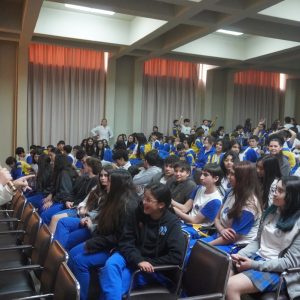
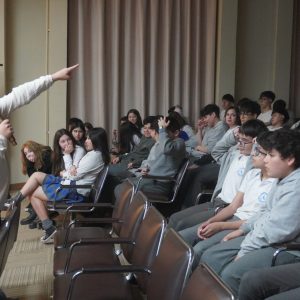
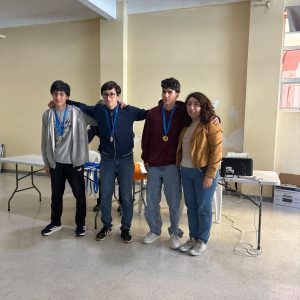
As part of the interdisciplinary project “80 Years Since World War II: Art in Times of War,” the ICT student team, Valentina Oyanadel, Catalina Oyanadel, and Rocío Oyarzúa, continued their interview series with the teachers leading each area of the initiative. The interviews, designed, recorded, and transcribed by the students, form a key component of the project’s audiovisual documentation.
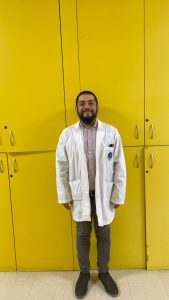
In this conversation, Mr. Víctor Saavedra, History and Geography teacher, described his experience as highly motivating. He emphasized that the project allowed him and his students to understand World War II from perspectives far beyond the traditional historical lens. Through collaboration with colleagues from Visual Arts, English, Aesthetics, and ICT, he explained, the project became a shared space for discovering history through multiple disciplines.
Reflecting on the challenges of coordinating methodologies across subjects, Mr. Saavedra highlighted the importance of conversation, flexibility, and openness. Although World War II is typically approached from within the discipline of History, he noted that the project revealed how art, language, and philosophical reflection can illuminate the historical context in powerful ways. For him, this interdisciplinary approach generated challenges, but also deep motivation and meaningful learning opportunities.
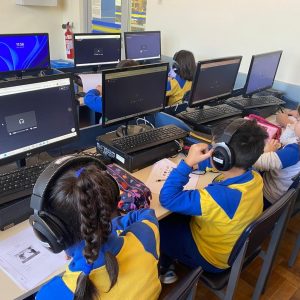
When discussing student growth, Mr. Saavedra observed that learners experienced the project as something different and stimulating. Using artificial intelligence, visuals, and reconstruction-based activities allowed them to engage with history through diverse methods rather than traditional classroom routines. He explained that these varied techniques encouraged students to value the process and broaden their understanding of how history can be studied, interpreted, and represented.
Addressing the question of relevance, he emphasized the importance of revisiting these themes eighty years after the end of Auschwitz and World War II. He explained that the legacy of the conflict is still present today through the ongoing struggle for human rights, which emerged as a central theme of the 20th century. Studying the war, he said, is not only about the past; it helps students understand the moral and civic questions that continue shaping the world.
Regarding the ethical use of Artificial Intelligence, Mr. Saavedra highlighted an essential challenge for both teachers and students: learning to confront and evaluate AI critically. While technology provides many tools and advantages, he stressed the responsibility of filtering information, verifying accuracy, and maintaining a thoughtful approach. Developing a critical eye, he explained, is becoming increasingly important in a world where technology plays such a central role.
Finally, Mr. Saavedra noted that student progress appeared in clear stages. What began as historical research evolved into the use of AI as an innovative tool for building timelines, analyzing content, and supporting classroom work. This integration of technology, he said, represents a meaningful shift in how students approach learning, one they have embraced enthusiastically across devices and platforms.
This interview adds another perspective to the teaching voices behind “80 Years Since World War II: Art in Times of War,” showing how interdisciplinary collaboration and digital tools can reshape the study of history. More interviews from the series will be published soon as part of the project’s final documentation.