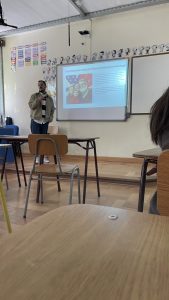
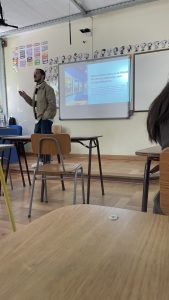
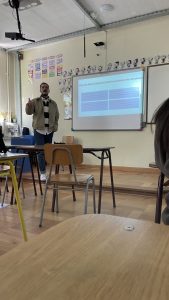
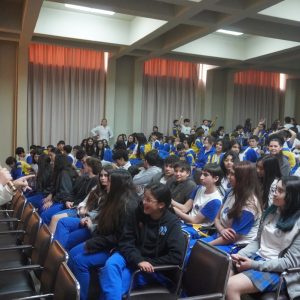
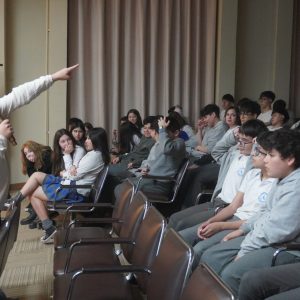
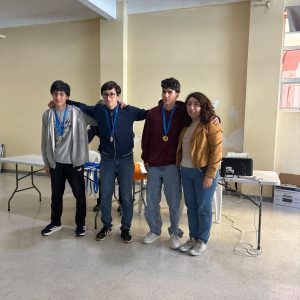
As part of the interdisciplinary project “80 Years Since World War II: Art in Times of War,” students from 8th grade A shared their analyses of looted artworks with Secondary students from the Aesthetics elective, in a session that brought together art, history, and critical reflection.
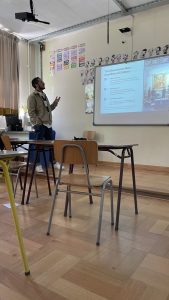
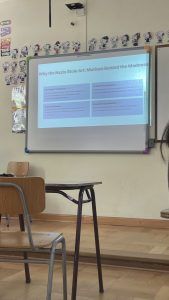
The encounter followed an introductory session led by Mr. Marcos Riveros, from the English Immersion Program, who provided historical and conceptual context to help students understand the complex relationship between art and war. Through this presentation, participants explored questions such as which paintings were stolen during World War II, why they were targeted, and how such acts reflected the cultural and ideological dimensions of the conflict.
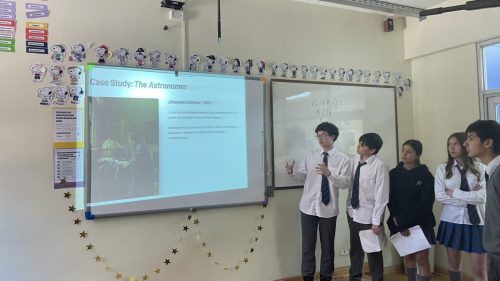
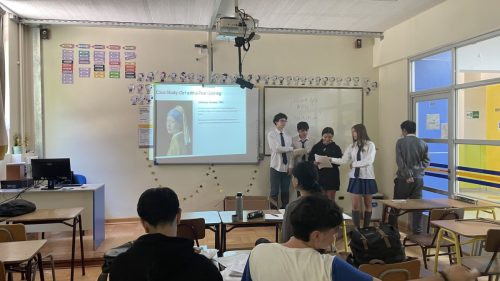
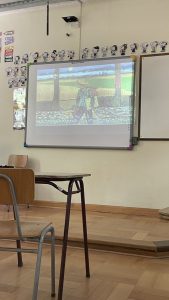
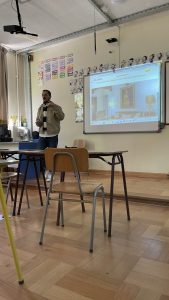
The 8th grade A students, Sebastián Huepe Etcheberry, Máximo Figueroa Cisternas, Juan Pablo Astete Castel, Fernanda Frindt Bilbao, and Daniela Galleguillos Ramírez, then presented their pictorial analyses of renowned paintings including Portrait of Adele Bloch-Bauer I by Gustav Klimt, The Astronomer, The Art of Painting, and Girl with a Pearl Earring by Johannes Vermeer, and The Painter on the Road to Tarascon by Vincent van Gogh. Their presentations highlighted the symbolism, color, and historical significance of each artwork, emphasizing how art can act as a testimony of memory, loss, and resilience.
Senior Year students from the Aesthetics elective, guided by Mr. Luis González, listened attentively and engaged in thoughtful discussion about the connection between art and human experience. They will now continue this exploration by writing analytical essays on the topic Art in Times of War, reflecting on questions such as What was the purpose of this systematic looting? and What role does the artist play during times of conflict?
The exchange between both groups created a collaborative and inspiring atmosphere, demonstrating how dialogue between students of different levels can foster deeper understanding and empathy. The project continues to highlight the power of interdisciplinary learning, where art, history, and language come together to build bridges of knowledge and reflection across generations.