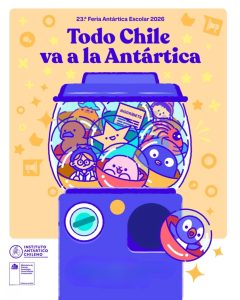
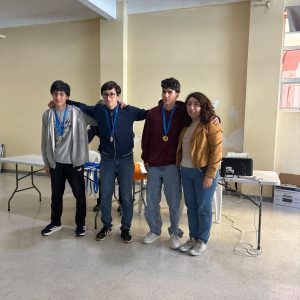
As part of its commitment to promoting scientific curiosity and interdisciplinary learning, Colegio Concepción is pleased to share that our school has taken part in the first stage of the application process for the XXIII Antarctic School Fair 2026, organised by the Chilean Antarctic Institute (INACH). This national initiative invites Senior Years students and teachers from across Chile to develop research proposals connected to Antarctica, scientific inquiry, and the protection of the White Continent.
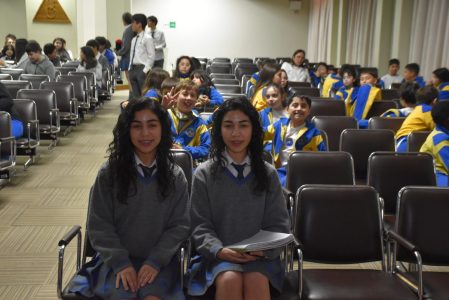
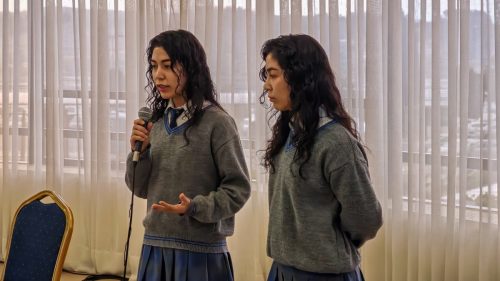
Representing our school, Valentina Oyanadel and Catalina Oyanadel, from 4th Senior Year, participated in this important academic experience by developing a scientific proposal focused on climate change and Antarctic vascular plants. Their project, titled “Warmer Nights, Lower Resistance: Assessing the Thermal Safety Margin of Antarctic Vascular Plants”, explored how nocturnal warming may affect the thermal safety margin of Deschampsia antarctica and Colobanthus quitensis, the only two native vascular plant species naturally found in Antarctica, when facing sudden freezing events during the Antarctic growing season.
This participation marks an important first step for our school community, and we are eager to see how the process will continue. Regardless of the final outcome, the experience has already represented a meaningful opportunity for the students to engage with scientific literature, formulate research questions, analyse environmental challenges, and connect school learning with current global issues.
The development of this proposal was possible thanks to the valuable guidance of Dr Constanza Ramírez, researcher from Universidad de La Frontera, Temuco, whose scientific support helped strengthen the academic foundation of the project. We also highlight the essential collaboration of our Biology teachers, Ms María Patricia Salazar, who has successfully participated in previous years representing the school in this initiative, and Ms Iowanna Maltés, who constantly supports and encourages interdisciplinary projects connected to science, research, and student learning.
A particularly meaningful aspect of this process is that the research stage was developed in English. The literature review, academic discussion, and initial proposal drafting were carried out using English as a tool to access scientific knowledge and communicate ideas. Once the proposal was completed, it was translated into Spanish, as the official application required the final document to be submitted in that language.
This makes the experience especially relevant for the English Immersion Plan, as it shows how English can be used beyond the language classroom in authentic academic and scientific contexts. Through this project, students approached English not only as a subject, but as a meaningful tool for research, collaboration, and connection with global scientific discussions.
For Colegio Concepción, participating in the Antarctic School Fair application process reflects the value of educational innovation, environmental awareness, and interdisciplinary learning. By encouraging students to explore Antarctic science and climate change, the school continues to promote experiences that connect the classroom with national and global challenges.
We congratulate Valentina and Catalina for their commitment, responsibility, and enthusiasm throughout this process, and we extend our appreciation to all those who supported this important academic initiative. As a school community, we now look forward to the next stages with great interest, proud of the work already achieved and motivated by the possibility of continuing to contribute to scientific learning from the school context.