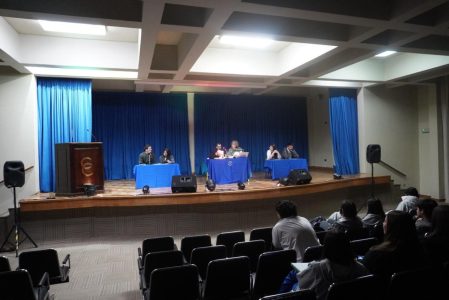
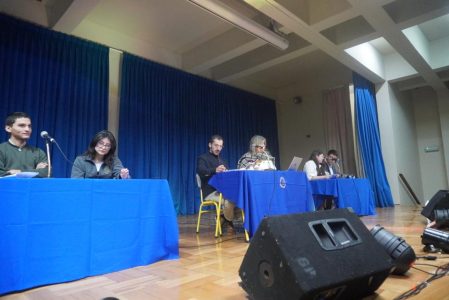
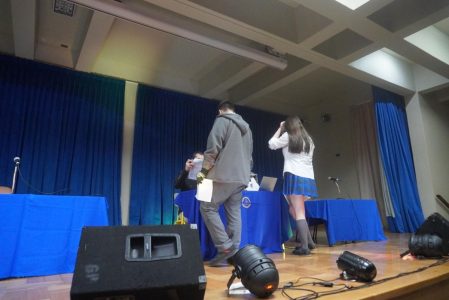
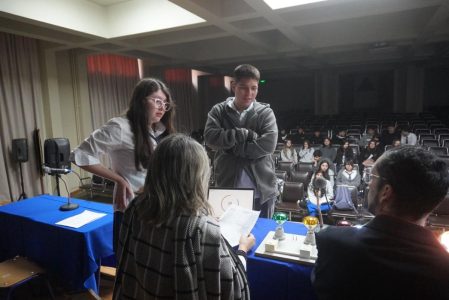
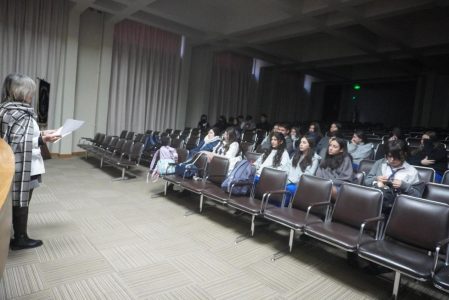
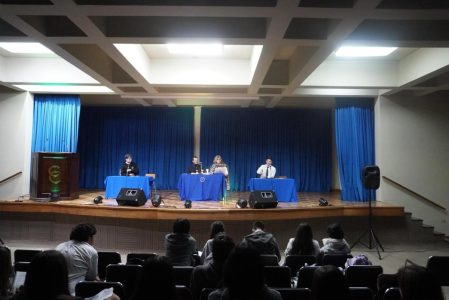
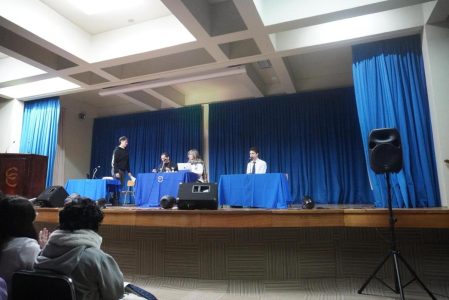
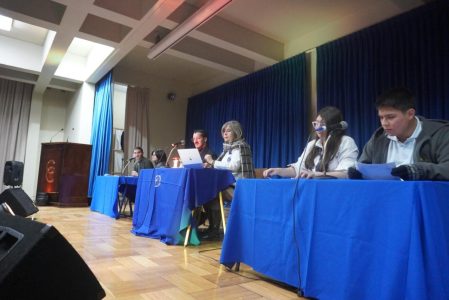
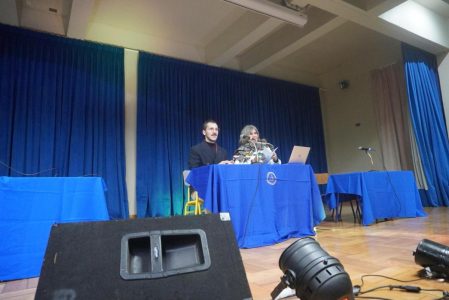
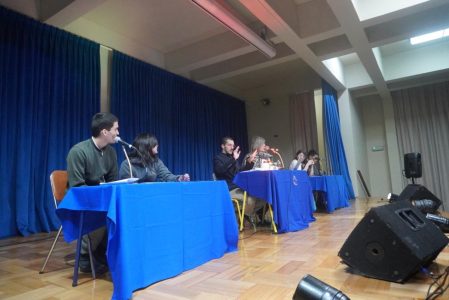
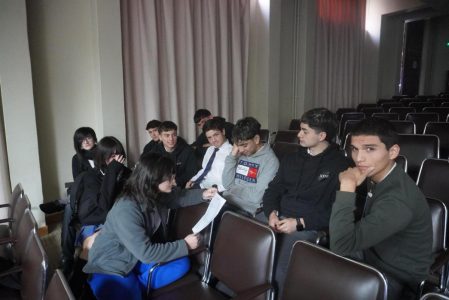
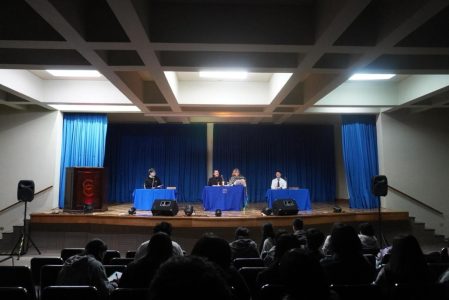
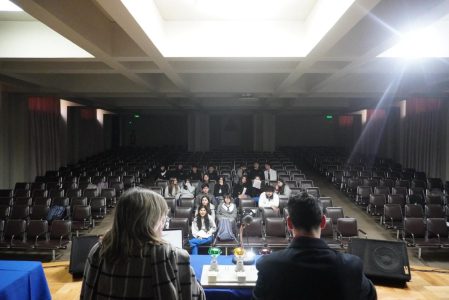
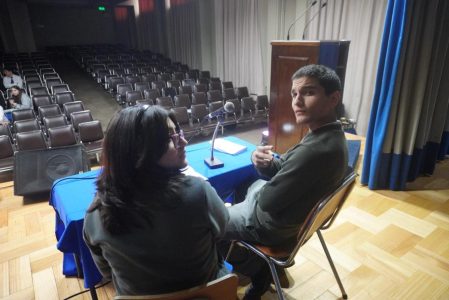
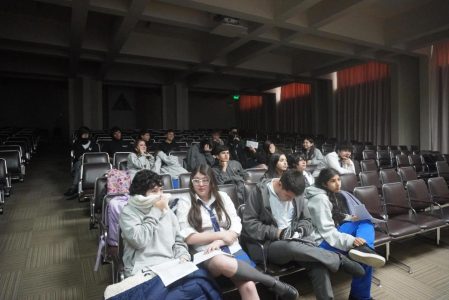
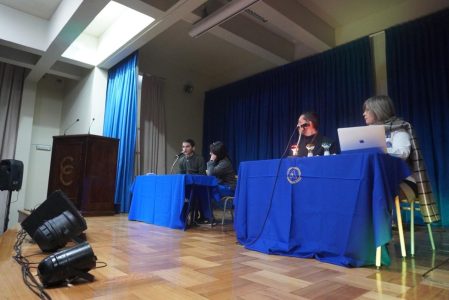
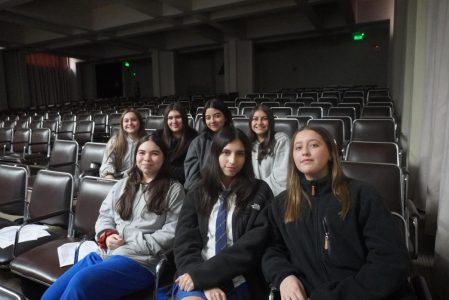
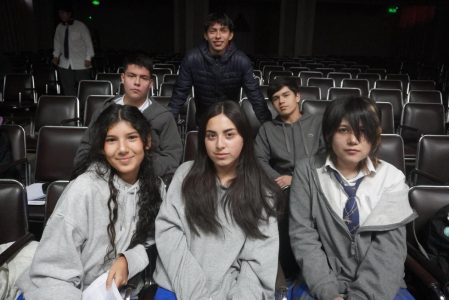
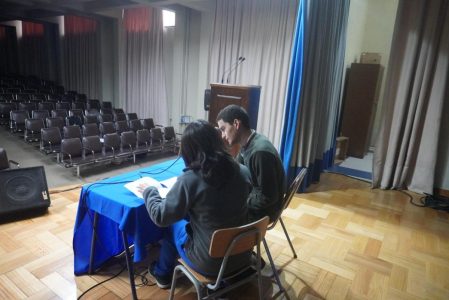
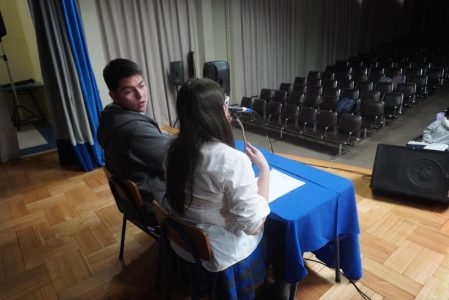
As part of this year’s World Book Day celebrations, students from 3rd and 4th grade Senior Area, who are part of the Literature elective at Colegio Concepción, participated in a dynamic literary debate that invited them to engage critically with the works that have shaped their reading journey.
The activity, held on Wednesday, April 22nd, in the school auditorium, was organised by the English Immersion Program in collaboration with Ms. Patricia Álvarez from the Spanish Language Department, creating a space where literature became a platform for dialogue, interpretation, and reflection.
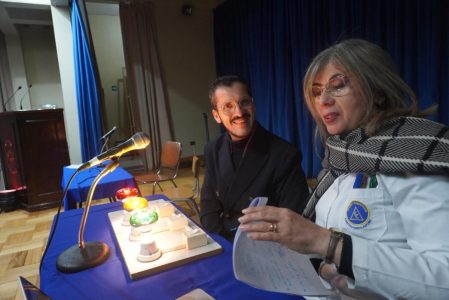
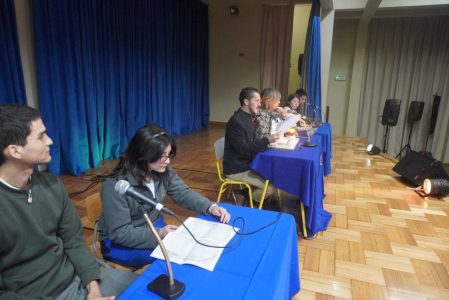
Working in small groups, students explored a range of literary theses based on the texts studied throughout the year. Each group was challenged to develop arguments both in favour of and against a given idea, using a structured approach that combined affirmation, reasoning, and evidence, allowing them to build well-supported and coherent positions.
The debate unfolded in a guided roundtable format, where students presented their arguments, responded to opposing viewpoints, and engaged in moments of reflection led by the teachers. This structure encouraged active participation while fostering a respectful and academically grounded exchange of ideas.
Among the works explored were classics such as Don Quijote de la Mancha, Romeo and Juliet, The Metamorphosis, Frankenstein, The Picture of Dorian Gray, Chronicle of a Death Foretold, and Like Water for Chocolate. Each text served as a starting point for discussions on themes such as identity, freedom, social norms, destiny, and human nature.
Through this experience, students strengthened their ability to analyze, interpret, and communicate complex ideas, engaging with literature not only as readers, but also as active participants in a shared intellectual process.
More than a commemorative activity, this literary debate became a space for critical thinking and dialogue, where different perspectives enriched the understanding of each work. It also reflected the value of interdisciplinary learning, where the English Immersion Program contributes by creating opportunities for students to approach literature from a broader cultural and linguistic perspective.