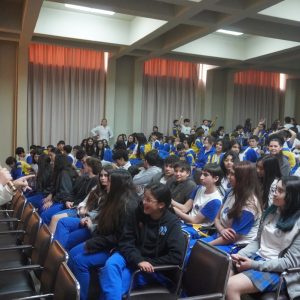
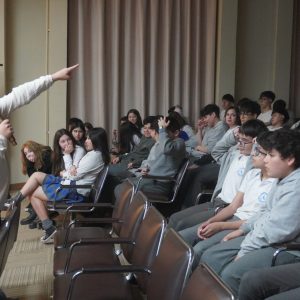
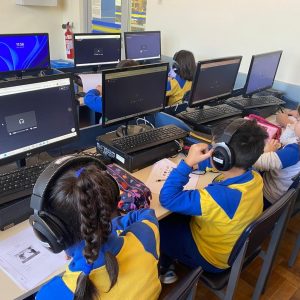
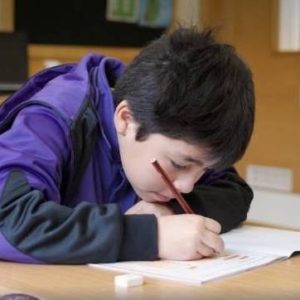
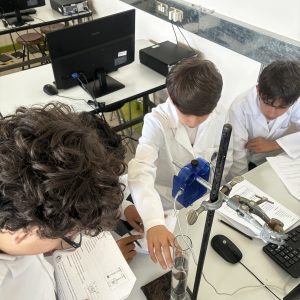
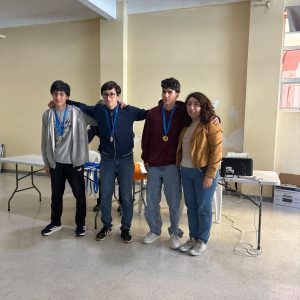
As part of the interdisciplinary project “80 Years Since World War II: Art in Times of War,” the ICT student team, Valentina Oyanadel, Catalina Oyanadel, and Rocío Oyarzúa, carried out a series of interviews with the teachers leading the initiative. Designed, recorded, and transcribed by the students, these interviews form an important part of the project’s audiovisual and written documentation.
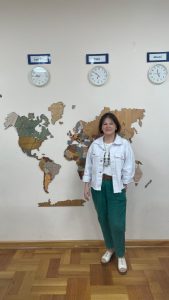
One of the featured interviews was conducted with Ms. María Patricia Jerez, who teaches the Geography component of the project. She began by highlighting the significance of connecting World War II history with geographical analysis. Working within an elective course, she emphasized how meaningful it was for students to investigate the war while also understanding the geographic conditions that shaped key events, such as the strategic locations chosen for the final battles. For many students, recognizing the physical spaces behind historical events added depth and curiosity to their understanding of the conflict.
When asked about interdisciplinary work, Ms. Jerez stressed the value of integrating multiple perspectives, history, art, English, geography, aesthetics, and digital literacy. She explained that this variety of “views and approaches” enriched student learning, allowing them to explore the same topic through different frameworks. For teachers, she added, interdisciplinary work encouraged collaboration and strengthened the overall coherence of the project.
Reflecting on student growth, she noted that students progressed through several stages of research, analysis, and interpretation. Throughout the project, they were required to examine primary and secondary sources, compare expert opinions, and form their own informed perspectives. According to Ms. Jerez, this process helped students build stronger reasoning skills, engage in deeper historical analysis, and understand the importance of remembering the events of World War II with clarity and purpose. “Today,” she said, “they are much more prepared to explain why it matters to reflect on the end of the war 80 years later.”
She also discussed the contemporary relevance of studying Auschwitz and the end of the conflict. For Ms. Jerez, history must not be forgotten, especially when current wars continue to affect the world. Even as warfare becomes more technological and less visible, she emphasized that the consequences are still devastating. Understanding past conflicts, she explained, helps students recognize the importance of communication, dialogue, and historical awareness so that such events are not repeated.
Regarding Artificial Intelligence, Ms. Jerez underscored the need for ethical and critical use. Although AI is a powerful tool, she explained that students must approach it cautiously, verifying information, evaluating sources, and using it responsibly. Incorporating AI into the project allowed students to engage with emerging technologies while reflecting on their ethical implications.
Finally, she described how student progress became evident throughout each phase of the project. Students began with curiosity, gradually built knowledge across different subjects, and reached a solid understanding of the overall ABP. With time and guidance, they developed critical thinking, analytical skills, and a clearer awareness of the connections between geography, history, and memory.
This interview contributes to the broader narrative of “80 Years Since World War II: Art in Times of War,”showcasing the reflections and perspectives that shaped the interdisciplinary experience. Additional interviews from the series will continue to be published as part of the project’s final documentation.