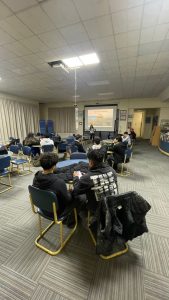
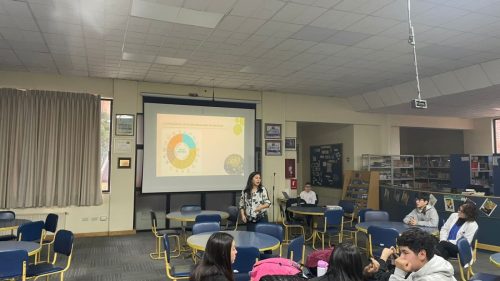
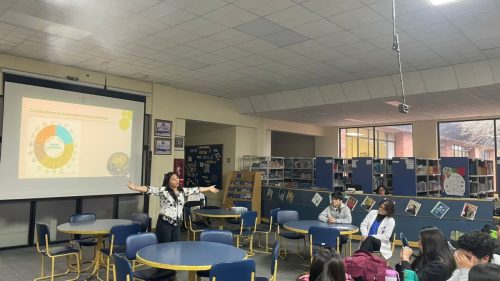
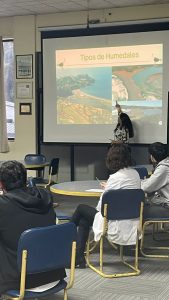
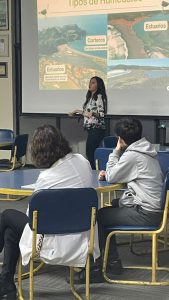
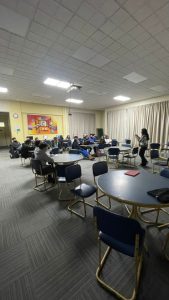
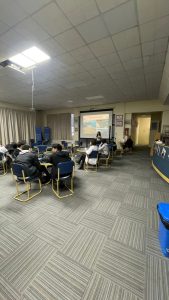
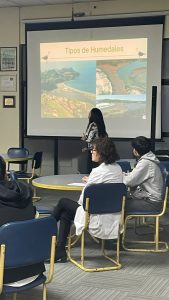
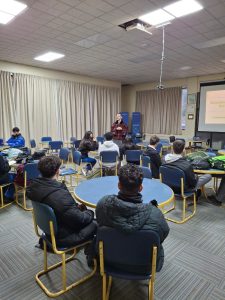
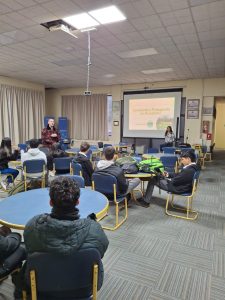
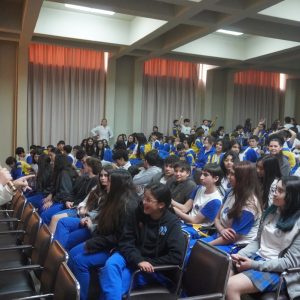
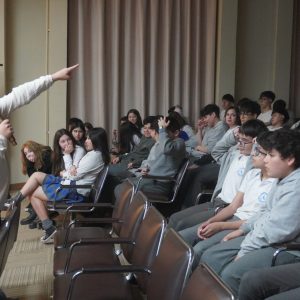
On Monday, July 21st, our students from the Geography elective participated in an interactive session focused on the importance of wetlands. This activity, held at the library, aimed to promote awareness about the ecological and social value of wetlands, as well as the challenges they face and the actions required for their conservation.
The session was part of an ongoing project organized by Ms. Jerez, our Geography expert and UTP coordinator, and Mr. Marcos Riveros from the English Immersion Plan. In this project, students will engage in a plogging activity. Plogging, a combination of jogging and picking up litter, not only helps clean up our environment but also raises awareness about the impact of waste on our ecosystems. This session served as a crucial introduction to the project, especially considering our participation in the International Plogging Week, in collaboration with Santa Maria da Feira, Portugal. This international initiative invites students to organize and participate in plogging activities, raising awareness about waste and its environmental impact.
The guest speaker, Francisca Rivas Cortés, a professional in Conservation of Natural Resources from the University of Concepción, shared her expertise on wetlands and their vital role in preserving biodiversity. Francisca, a member of the environmental organization Mawizako in Chiguayante, highlighted the importance of wetlands in the broader context of environmental protection.
Her educational talk covered key topics, such as the definition of wetlands, their ecological importance, and their contribution to human society. Francisca also provided insights into the legal frameworks that protect these ecosystems, both in Chile and internationally. She highlighted the growing threats to wetlands, and concluded with actions to improve the quality and sustainability of these fragile ecosystems.
Following the talk, students participated in a group discussion, where they reflected critically on the importance of wetlands. This was a valuable opportunity for students to engage in meaningful dialogue, deepening their understanding of environmental protection.
This session was an important part of the ongoing project, and we will be updating our school community with more news about the plogging activity in the upcoming days. This project aims to combine learning with action, allowing students to contribute to environmental conservation both academically and practically.