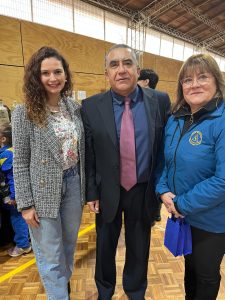
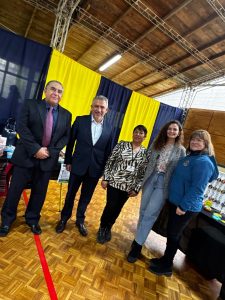
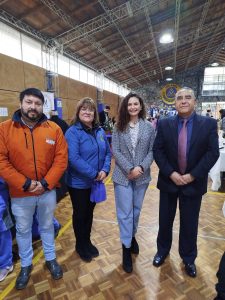
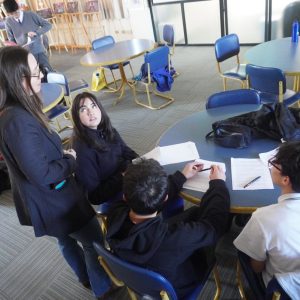
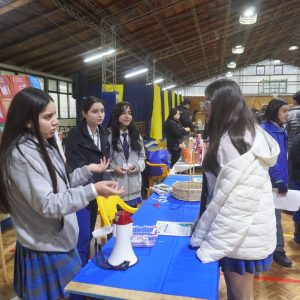
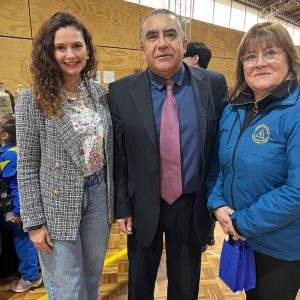
As part of the interviews conducted during Eco-Fair II, developed within the framework of the COEMCO winning project “Sustainable School in Action: Eco-Fairs and Global Awareness through English,” students from the ICT Extracurricular Class spoke with Mr. Víctor Viveros Vidal, Headmaster of Colegio Concepción. This conversation offered an institutional perspective on the value of environmental initiatives and their impact on students and the wider school community.
During the interview, Mr. Viveros expressed his appreciation for the fair and highlighted the importance of creating spaces where students, teachers, entrepreneurs, and members of the community can come together around sustainability. He explained that the fair was not only an opportunity to present products connected to recycling and responsible use of resources, but also a clear example of how a school community can move towards a deeper understanding of sustainability.
One of the central ideas shared by Mr. Viveros was that protecting nature begins with personal and collective decisions. He referred to simple actions such as recycling at home, caring for natural resources, and understanding the importance of sustainable practices in everyday life. At the same time, he also connected these actions with the idea of circular economy, where products and resources can generate opportunities to reinvest, continue creating, and support more responsible forms of production.
The interview also addressed the importance of local entrepreneurship in Chiguayante. Mr. Viveros described the commune as a young and growing territory that has been developing greater environmental awareness through different encounters and community events. He also highlighted its privileged geographical location between the Biobío River and the Coastal Mountain Range, a setting that offers valuable natural resources and a strong connection with the environment.
According to Mr. Viveros, this local context opens many possibilities for sustainable entrepreneurship. Materials such as wood, clay, stones, recycled resources, native plants, natural essences, honey, sweets, syrups, and other local products show how the territory itself can inspire creative and environmentally responsible initiatives. In this sense, entrepreneurship in Chiguayante has become a meaningful expression of identity, creativity, and community development.
For the students from the ICT Team, this interview helped deepen the understanding of the fair beyond the stands and products displayed. Through the Headmaster’s reflections, Eco-Fair II could be seen as a space where environmental education, local identity, entrepreneurship, circular economy, and school learning meet in a concrete and meaningful way.
This conversation also reinforces one of the central purposes of Sustainable School in Action: to help students recognise that sustainability is not only a topic to study, but a way of thinking, acting, and connecting with the community. By listening to different voices during the fair, students were able to document how school projects can contribute to environmental awareness and strengthen the relationship between Colegio Concepción and its local context.
Article and interview by the ICT Team
Edited and enhanced with AI support