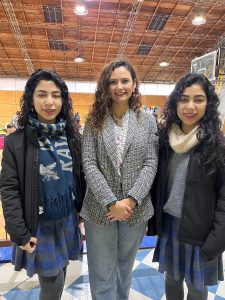
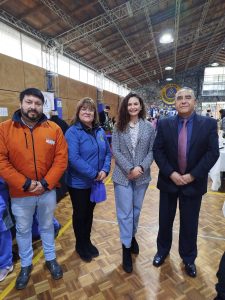
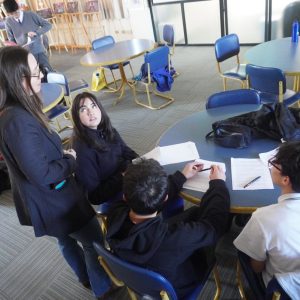
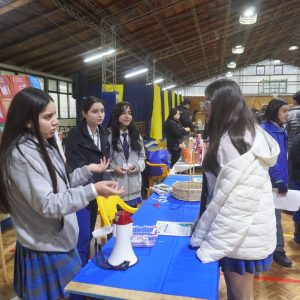
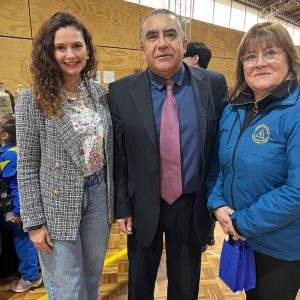
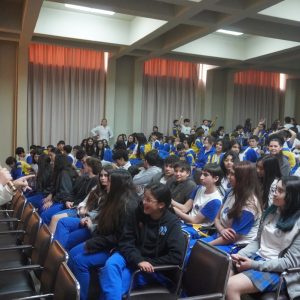
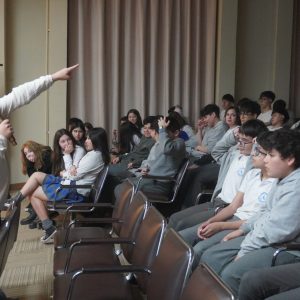
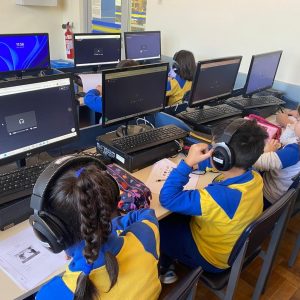
As part of the interviews conducted during Eco-Fair II, developed within the framework of the COEMCO winning project “Sustainable School in Action: Eco-Fairs and Global Awareness through English,” students from the ICT Extracurricular Class held a meaningful conversation with Mayerlin Suárez, councillor of the Municipality of Chiguayante and President of the Environmental Commission of the Municipal Council.
During the interview, Ms. Suárez shared her connection with environmental protection and local sustainability. She explained that her interest in nature began during her studies in Environmental Engineering at the University of Concepción, and that her current work as a councillor is strongly connected to the protection of natural spaces, wetlands, native forests, and local biodiversity.
One of the central topics of the conversation was the importance of protecting the natural heritage of Chiguayante. Ms. Suárez referred to places such as Humedal Los Boldos, Cerro Manquimávida, Estero Leonera, and Parque Nacional Nonguén, highlighting their ecological value and the need to restore and protect native ecosystems. She also mentioned local species such as the puma, the pudú, and the guiña, reminding students that biodiversity is not something distant, but something that exists in their own territory.
The interview also allowed students to learn more about the connection between the school and local environmental initiatives. Ms. Suárez explained that this relationship began through previous work with Ms. Iowanna Maltés, including visits to Humedal Los Boldos and activities where students could explore their surroundings with the support of local environmental organisations. For her, these experiences are essential because they help students develop territorial belonging, awareness, and a deeper understanding of why local ecosystems must be protected.
Another important part of the conversation was the role of sustainable entrepreneurship in the Eco-Fair. Ms. Suárez valued the opportunity to connect local entrepreneurs from Chiguayante with Colegio Concepción, especially those who work with recycling, reuse, creative economies, and environmentally conscious products. She also highlighted the positive relationship that has been built over time between the school and the participating entrepreneurs, who have expressed their appreciation for the respectful and welcoming treatment they receive from students and the school community.
When asked about the impact of this type of fair on students, Ms. Suárez explained that direct contact with the community helps generate environmental awareness. By meeting local entrepreneurs and learning about sustainable products, students can discover different ways of thinking about productivity, creativity, and responsible consumption. These experiences show that sustainability is also connected to local identity, innovation, and future possibilities.
This interview helped preserve one of the most important messages of the Eco-Fair: sustainability becomes more meaningful when students can connect it with their own territory, their community, and real people working to protect the environment. Through this conversation, the ICT Team was able to document how school projects can open spaces for dialogue, reflection, and collaboration beyond the classroom.
Experiences like this show how ICT can become a tool for communication and school memory. By recording, organising, and transforming these conversations into articles, students help share the voices of those who contribute to sustainability, environmental education, and community engagement.
Article and interview by the ICT Team
Edited and enhanced with AI support