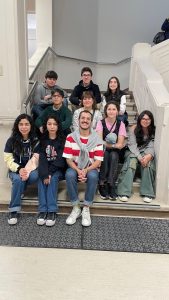
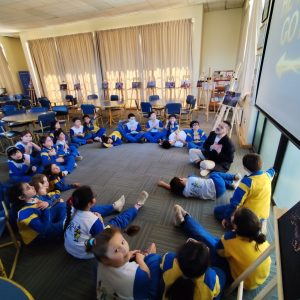
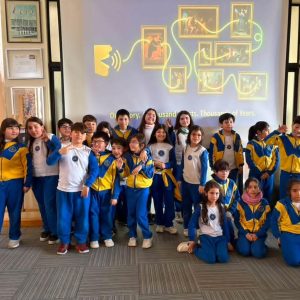
After learning about plant collections at the Herbarium and animal biodiversity at the Zoology Museum, our field trip continued with a third stop at the Anatomy Museum of the University of Concepción, a space that allowed us to observe the human body from a scientific and educational perspective.
This museum belongs to the Department of Normal Anatomy and Legal Medicine at the University of Concepción and is considered an important part of Chile’s scientific heritage. According to institutional information, the museum has historically supported the teaching of health-related careers, offering students the opportunity to learn directly from anatomical preparations and understand systems and structures of the human body that are essential for life.
During the visit, we were able to connect this experience with the broader learning process developed by the ICT Extracurricular Class and the Ecobrigade. Although our current unit has focused mainly on plant cultivation, propagation, and digital records, the museum helped us understand that careful observation, organisation of information, and scientific documentation are also essential in the study of the human body.
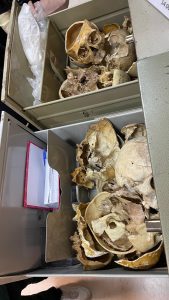
The museum includes different thematic sections related to organs, bones, muscles, joints, head and neck structures, hands, feet, abdominal and pelvic organs, and other anatomical systems. These collections allowed us to see how the body can be studied through different parts and functions, helping us recognise the importance of classification and organised knowledge in science.
This third stop also helped us reflect on the value of scientific collections as learning spaces. In the same way that a herbarium preserves plant specimens and a zoology museum organises animal collections, an anatomy museum preserves knowledge about the human body for educational and research purposes. Each space uses observation, classification, records, and preservation to help people understand life from a different angle.
For our ICT work, this visit was also connected to the importance of communicating information responsibly. Scientific knowledge needs order, clarity, and respect, especially when it is related to the human body. Seeing these collections reminded us that learning is not only about collecting information, but also about understanding how that information is organised, protected, and shared.
This final museum experience helped us complete a wider view of living beings: plants, animals, and the human body. Through the field trip, we were able to connect environmental education, scientific heritage, digital literacy, and curiosity, understanding that science can be explored through many spaces beyond the classroom.
Article written by the ICT team; edited and enhanced with AI support