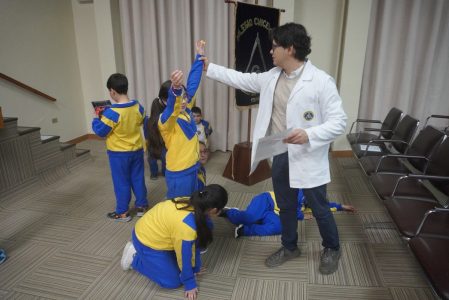
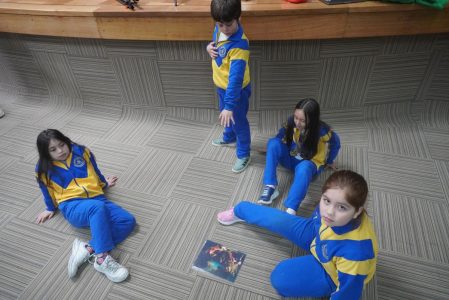
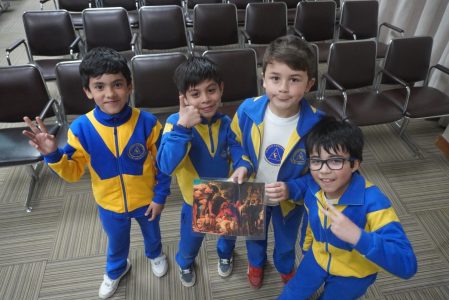
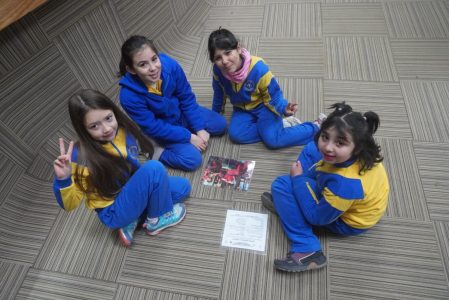
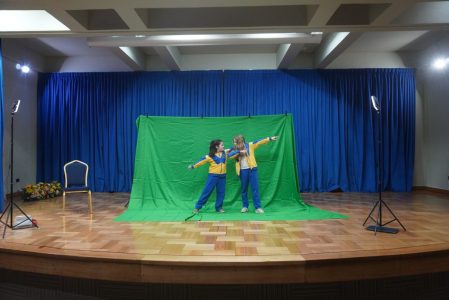
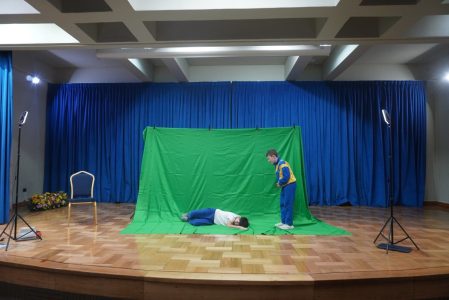
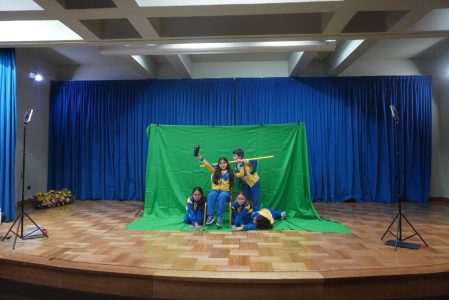
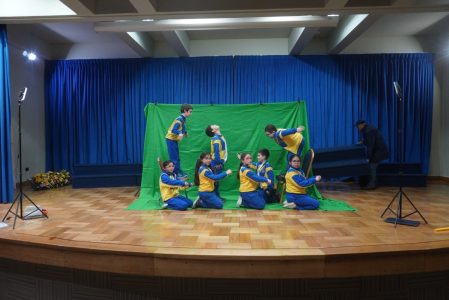
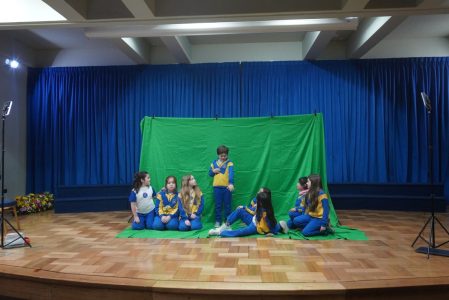
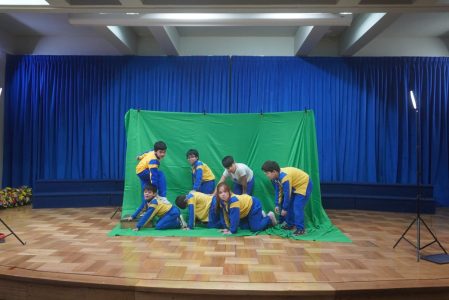
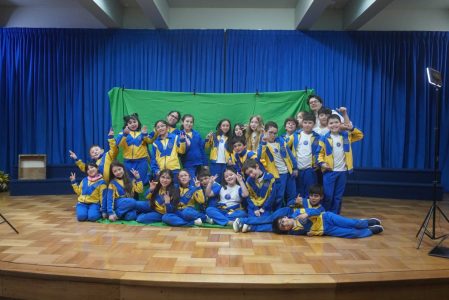
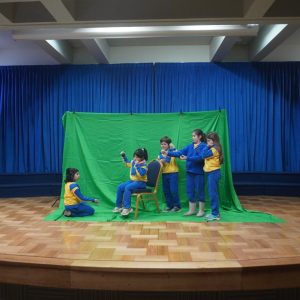
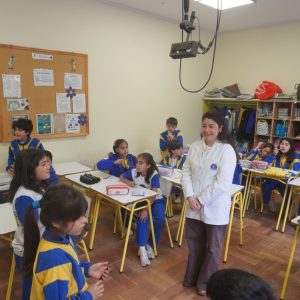
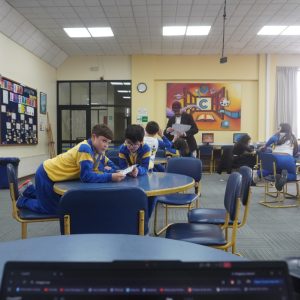
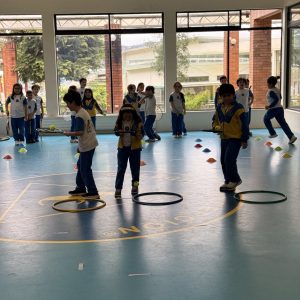
Students from 3rd grade A continued their journey into The Odyssey through the second part of this interdisciplinary project, transforming historical artworks into living scenes. After the first session, where they explored Odysseus’ adventures through storytelling, maps, sound, music, and art observation, this new experience invited them to move from looking at art to becoming part of it.
The activity was developed as part of the Junior Area Music subject, guided by Mr. Rodrigo Vega, and articulated with the English Immersion Plan, led by Mr. Marcos Riveros. Through this second stage, students connected Music with History, Geography and Social Sciences, Language and Communication, visual art, and English as a communicative tool for following instructions, collaborating, and expressing meaning.
A central idea behind the activity was that The Odyssey has never remained in only one form. For centuries, this ancient story has travelled through oral tradition, poetry, pottery, sculpture, painting, and now through the students’ own interpretations. In this way, 3rd grade A approached the project not only as learners, but also as young creators who could add their own voices, gestures, and expressions to a story that has inspired many artists over time.
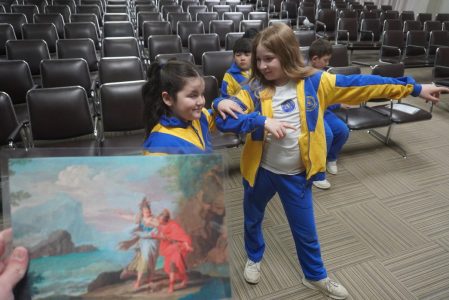
During the session, students worked with different historical representations of The Odyssey, including Homer Reciting his Poems by Sir Thomas Lawrence, Odysseus in the Cave of Polyphemus by Jacob Jordaens, Circe Offering the Cup to Ulysses by John William Waterhouse, Odysseus and the Sirens from Ancient Greek pottery, Penelope and the Suitors by John William Waterhouse, Athena Appearing to Odysseus to Reveal the Island of Ithaca by Giuseppe Bottani, and Ulysses and Argus by Briton Rivière.
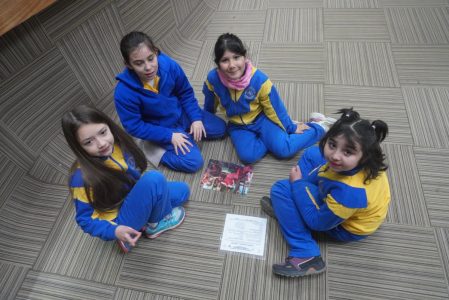
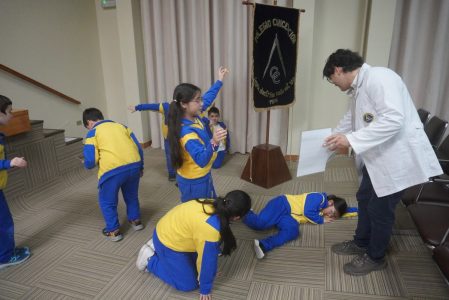
Each group received an Artwork Mission Card and carefully observed its assigned image before preparing the recreation. Students looked for visual clues such as gestures, gazes, body positions, foreground, background, objects, symbols, and the relationship between characters. These details helped them understand how an artwork can communicate fear, power, magic, temptation, patience, guidance, recognition, or homecoming without needing to explain everything in words.
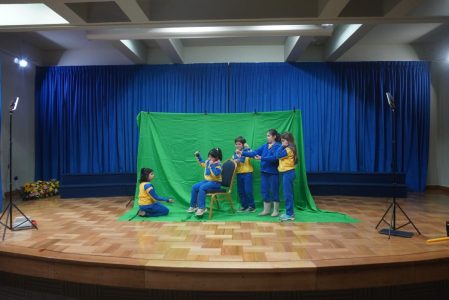
After observing and planning, students organised their roles, practised their frozen poses, selected simple props, and prepared their scene for the photography studio. The challenge was not to reproduce each artwork perfectly, but to interpret its meaning through body expression, teamwork, and visual composition. Every look, hand position, distance, and facial expression became part of the story they wanted to tell.
English was naturally integrated throughout the process through simple studio instructions such as “Look at the artwork,” “Find your position,” “Find your expression,” “Hold your pose,” and “Lights. Camera. Art!” These expressions allowed students to use the language in an active and purposeful way while taking part in a creative classroom experience.
Through this activity, 3rd grade A discovered that The Odyssey can be understood not only as an ancient story, but also as a long artistic journey. By recreating these artworks, students connected mythology, music, art, photography, English, and imagination in a meaningful and memorable way.
We invite our school community to see the highlights of this activity and stay tuned for the final artwork recreations, which will be shared soon once they are ready.
One ancient story, many artists, thousands of years, and now our students.